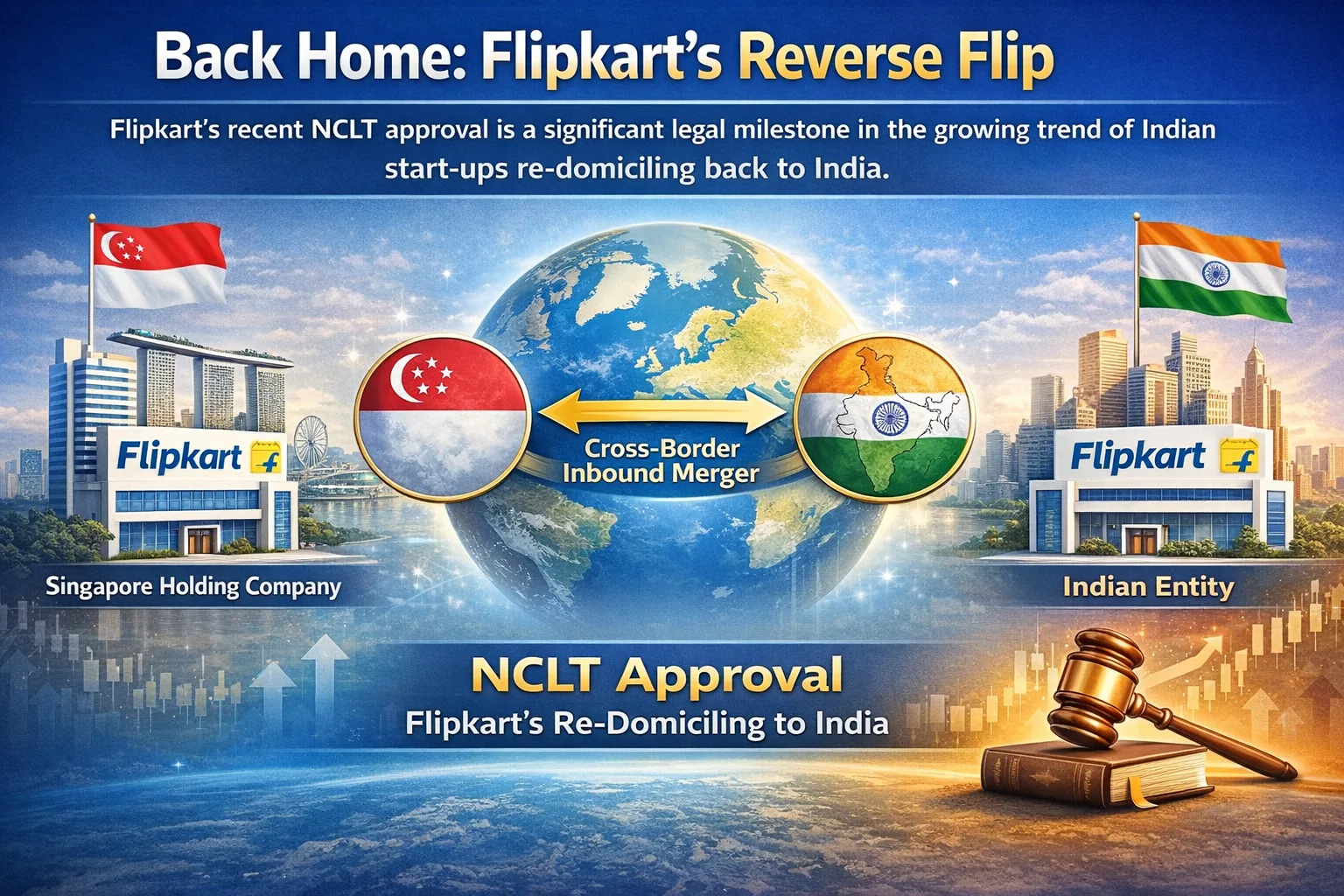
Back Home: Flipkart’s Reverse Flip
Flipkart’s recent NCLT approval is a significant legal milestone in the growing trend of Indian start-ups re-domiciling back to India. The NCLT has approved Flipkart’s cross-border inbound merger, allowing the Singapore holding company to merge into the Indian entity, which is a foundational step for re-domiciling to India.
𝗦𝘁𝗿𝘂𝗰𝘁𝘂𝗿𝗲: 𝗕𝗲𝗳𝗼𝗿𝗲 𝘃𝘀 𝗔𝗳𝘁𝗲𝗿
Pre: Foreign HoldCo (Singapore) → Indian operating company
Post : Indian Parent Company → overseas / global subsidiaries
India becomes the jurisdiction of control, governance, and listing.
𝗪𝗵𝘆 𝗿𝗲𝘃𝗲𝗿𝘀𝗲 𝗳𝗹𝗶𝗽𝗽𝗶𝗻𝗴
• Preparation for an Indian IPO
• Deeper domestic capital markets in India
𝗣𝗼𝗽𝘂𝗹𝗮𝗿 𝗿𝗲𝘃𝗲𝗿𝘀𝗲 𝗳𝗹𝗶𝗽𝗽𝗶𝗻𝗴 𝘀𝘁𝗿𝘂𝗰𝘁𝘂𝗿𝗲𝘀
A reverse flip can be implemented through multiple legal mechanisms. The most common route is a 𝗰𝗿𝗼𝘀𝘀-𝗯𝗼𝗿𝗱𝗲𝗿 𝗶𝗻𝗯𝗼𝘂𝗻𝗱 𝗺𝗲𝗿𝗴𝗲𝗿, where the foreign holding company merges into the Indian entity. Alternatives include 𝘀𝗵𝗮𝗿𝗲 𝘀𝘄𝗮𝗽–𝗯𝗮𝘀𝗲𝗱 restructurings and 𝗰𝗼𝘂𝗿𝘁-𝗮𝗽𝗽𝗿𝗼𝘃𝗲𝗱 𝘀𝗰𝗵𝗲𝗺𝗲𝘀 for complex, multi-layered holding structures, each governed by Indian company law, FEMA, and tax regulations. Inbound mergers provide a clean, IPO-ready structure but involve regulatory approvals and potential shareholder tax considerations. Share swaps offer structural flexibility but may result in higher tax exposure and cap table complexity. Court-approved schemes can address layered groups but typically require longer timelines and heightened compliance oversight.
𝗥𝗲𝗰𝗲𝗻𝘁 𝗽𝗿𝗲𝗰𝗲𝗱𝗲𝗻𝘁𝘀 have established reverse flipping as a mainstream legal pathway. PhonePe has completed its re-domiciliation to India, while Groww, Meesho, Razorpay, and Zepto have initiated similar restructurings, providing regulatory comfort to NCLT, RBI, and FEMA authorities.
𝗣𝗿𝗲𝘀𝘀 𝗡𝗼𝘁𝗲 𝟯: 𝗙𝗹𝗶𝗽𝗸𝗮𝗿𝘁 & 𝗧𝗲𝗻𝗰𝗲𝗻𝘁 𝗔𝗻𝗴𝗹𝗲
In Flipkart’s case, Press Note 3 approval is a relevant consideration due to Tencent’s minority shareholding in Singapore Company. As part of the reverse flip, any merger or share issuance that results in a transfer or re-issuance of shares to a China-based investor may trigger government approval. While this does not prohibit the transaction, it introduces an additional approval layer to ensure continuity of ownership does not compromise national interest. Given Tencent’s non-controlling stake and established precedents, approval likelihood is moderate to high, with timelines typically in the 3–6 month range, subject to transaction structuring.
𝗖𝗹𝗼𝘀𝗶𝗻𝗴 𝗧𝗵𝗼𝘂𝗴𝗵𝘁 – Reverse flipping is no longer an exception it is becoming a mainstream legal pathway for India-origin tech companies aligning ownership, governance, and capital markets back home.